
PRODUCT
Define food type, dimensions, weight, format and fragility.

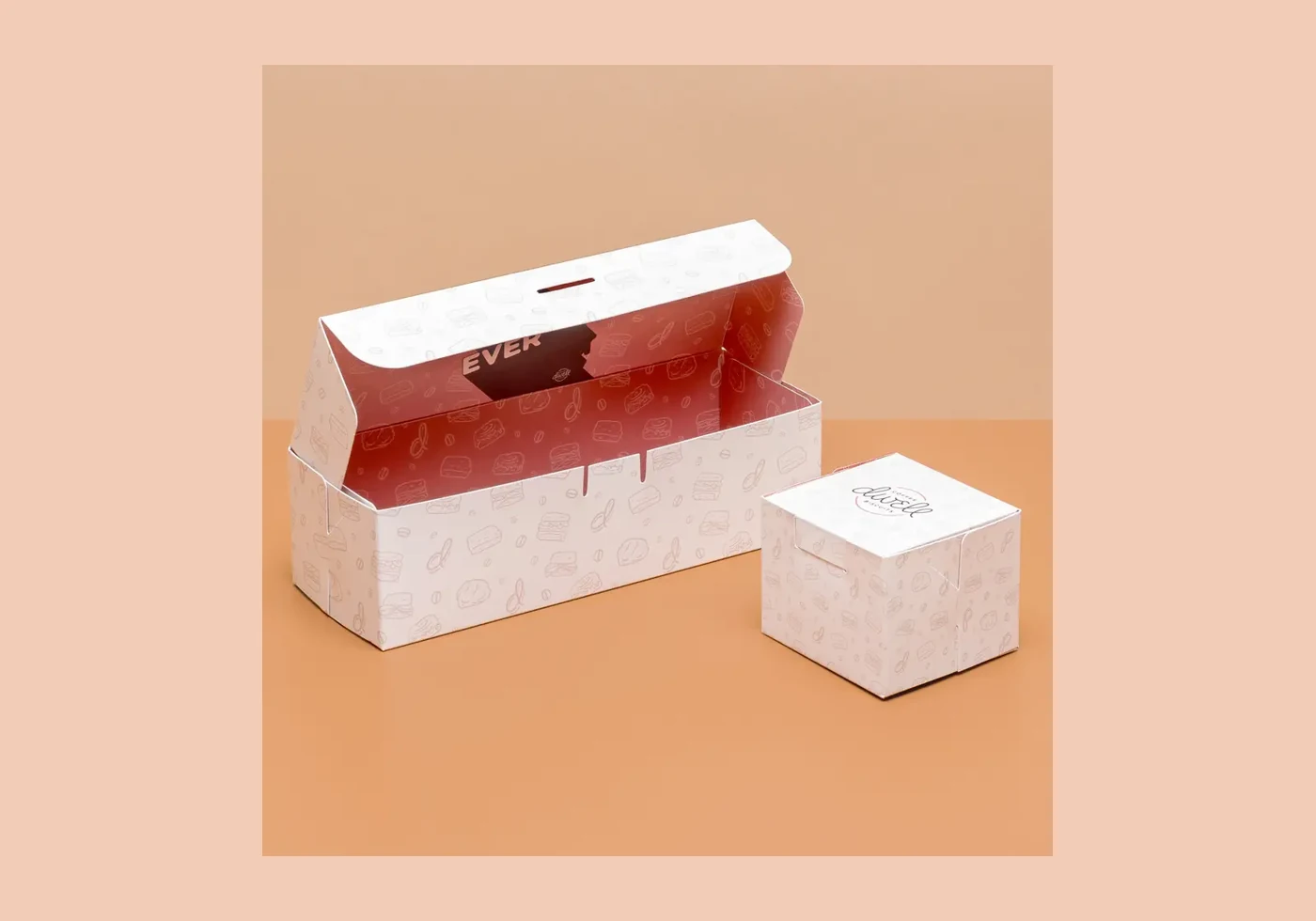
Choose food packaging from the actual product and intended use—not from a generic food-box category. Plan printed cartons, corrugated packaging and other custom directions around product fit, contact conditions, handling, presentation and the documentation required for the chosen material system.
Start by telling us whether the package will touch food directly or sit around an already sealed or wrapped primary package. That distinction changes the material and compliance questions.
Final dimensions, materials, print routes and capability claims are confirmed against the actual project specification.
Define food type, dimensions, weight, format and fragility.
Confirm whether this packaging layer directly touches food.
Record grease, moisture, temperature, storage and handling.
Define only the performance the package actually needs.
Choose the carton or box around packing, display and distribution.
Use supplier/regulatory evidence to determine what statements can be made.
A printed carton around a sealed pouch, tray, jar or wrapped food does not automatically have the same material requirements as a package that directly touches the food.
Custom food packaging is packaging designed around a specific food product, its contact conditions, handling and sales channel. It may be direct-contact packaging that touches food, or secondary packaging such as a printed carton around a sealed primary container.
Because requirements depend on intended use, food packaging is not one universal material. Board, coating, liner, ink, adhesive, window and other components must be evaluated for the actual application before suitability claims are published.
These are project inputs—not blanket capability promises.
Paperboard, corrugated and kraft-based materials can appear in food packaging systems, but the base material name does not prove suitability for every food. Coatings, liners, adhesives, inks, windows and other components can change both the intended-use and end-of-life discussion.
If a barrier is required, define the job precisely: grease resistance, moisture management, aroma, light, temperature or another documented requirement.

A window can improve product visibility but adds a material/component that must be compatible with the package and intended use. Venting or openings can also change protection and contamination considerations.
Brands may need nutrition, ingredient, allergen, date, lot, barcode or other information depending on product and applicable rules. TPW should design around approved content rather than determining legal labeling requirements.
Any claim that packaging extends freshness, shelf life, barrier performance, freezer performance, grease resistance or heat tolerance needs a defined material system, intended use and appropriate evidence or testing.
For California projects, evaluate the actual packaging system and current CalRecycle guidance. This page is educational and should not be presented as legal advice. Broad recyclable, compostable, biodegradable or eco-friendly claims require supporting evidence for the finished package.
Include delivery ZIP, quantity by SKU, target in-hand date, storage/receiving conditions and whether packaging goes to your operation, a co-packer, restaurant, retail location or fulfillment center.
If food production, filling, packing and box delivery happen at different locations, document the handoff. A visually correct box can still create waste if it arrives set up, flat, nested or bundled in a format the packing workflow did not expect.
Separate regulatory/product-content approval from packaging production approval, then save the approved specification for reorders.
Direct, application-specific answers without blanket food-safe claims.
Start with the food application and contact role. If materials are undecided, describe the conditions the package must handle and the layer TPW would supply.
Define product, contact, condition and barrier before choosing the structure or marketing claim. That gives the packaging team a realistic brief and identifies what evidence still needs verification.