

MATERIAL DECISION HUB
Custom Packaging Materials for Los Angeles Brands
The material changes how a custom box protects the product, prints, folds, feels, ships and finishes. Compare paperboard/cardboard for lightweight retail cartons, corrugated board for shipping and mailers, kraft directions for a natural paper look, and rigid board for premium presentation — then match the substrate to the box structure and product instead of choosing on appearance alone.
Material names are only the beginning. Grade, thickness or flute, coating, print method, finish, product load and box structure determine how the finished package performs.
- Paperboard
- Corrugated
- Kraft
- Rigid board
Direct Answer
What Materials Are Used for Custom Packaging Boxes?
The main paper-based material families used across custom boxes are paperboard/cardboard, corrugated board, kraft paper or board directions and rigid chipboard/board.
Paperboard is lightweight and forms folding cartons; corrugated combines liners with a fluted medium for additional structural protection; kraft describes a strong paper/liner direction that can appear in different box systems; rigid board uses thick solid board, typically wrapped with printed or specialty paper, for premium set-up packaging. The exact specification still depends on grade, thickness or flute, coating, print, finish, product load and structure.
PROTECT → PRINT → FORM → FINISH → RECOVER
Choose a Packaging Material in This Order
Material Discovery
Explore Core Packaging Materials
Use the hub to choose a material family; detailed grades and verified specifications belong on the child page and approved quote.
Paperboard / Cardboard
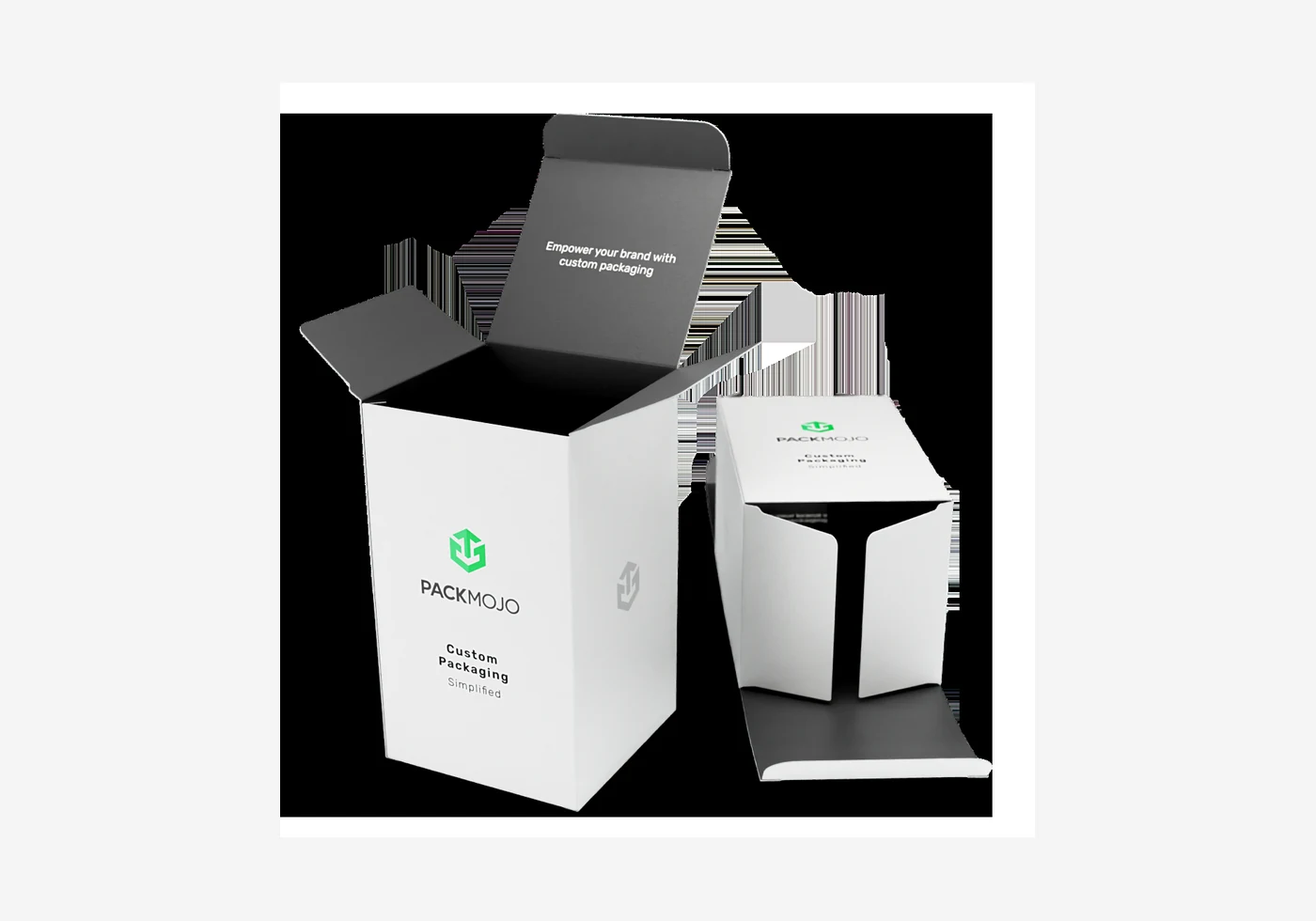
Lightweight folding-carton material with strong printable-surface options for retail and consumer products.
Corrugated Board
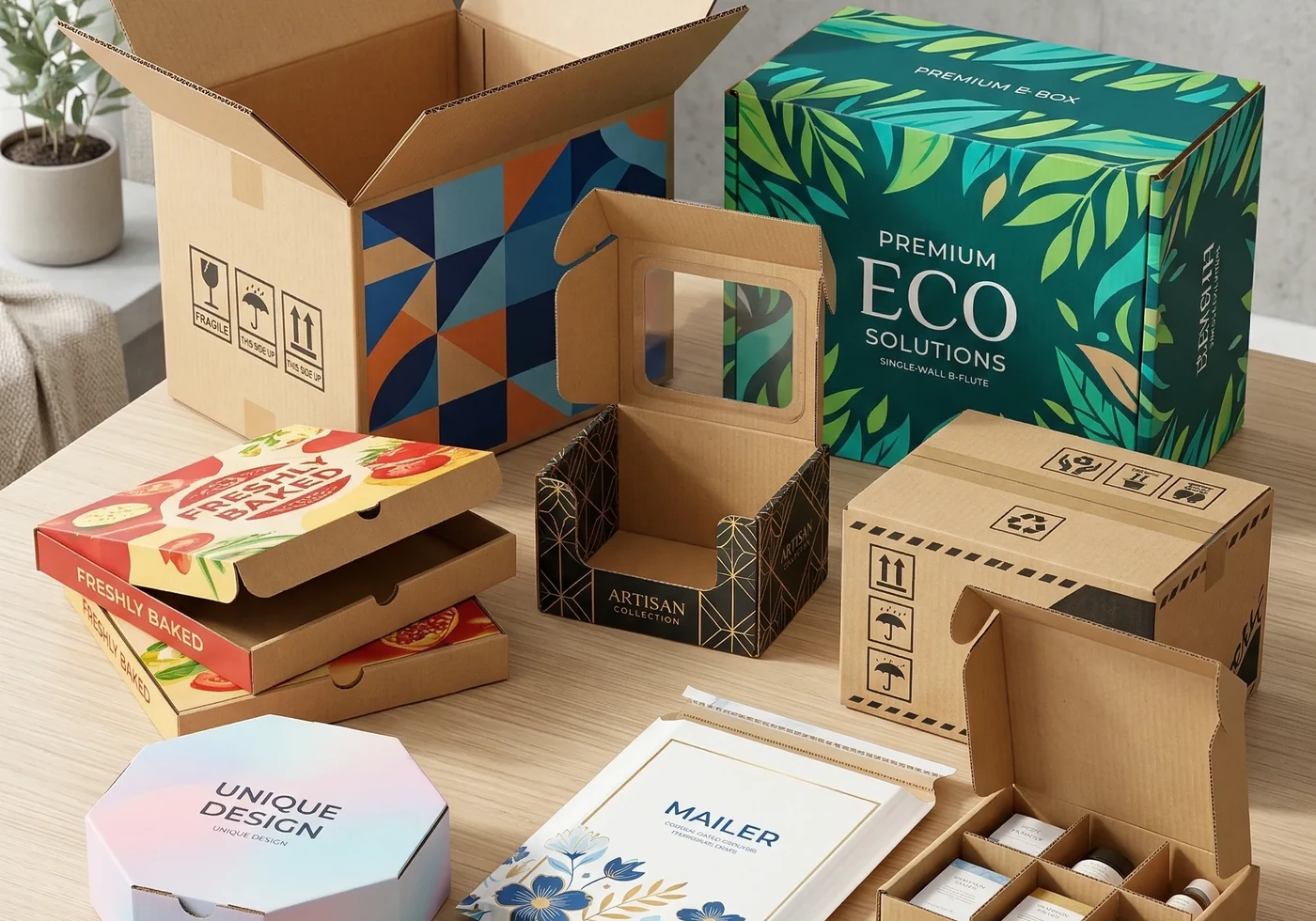
Fluted paper-based structure for mailers, shipping boxes and products needing more handling protection.
Kraft Board
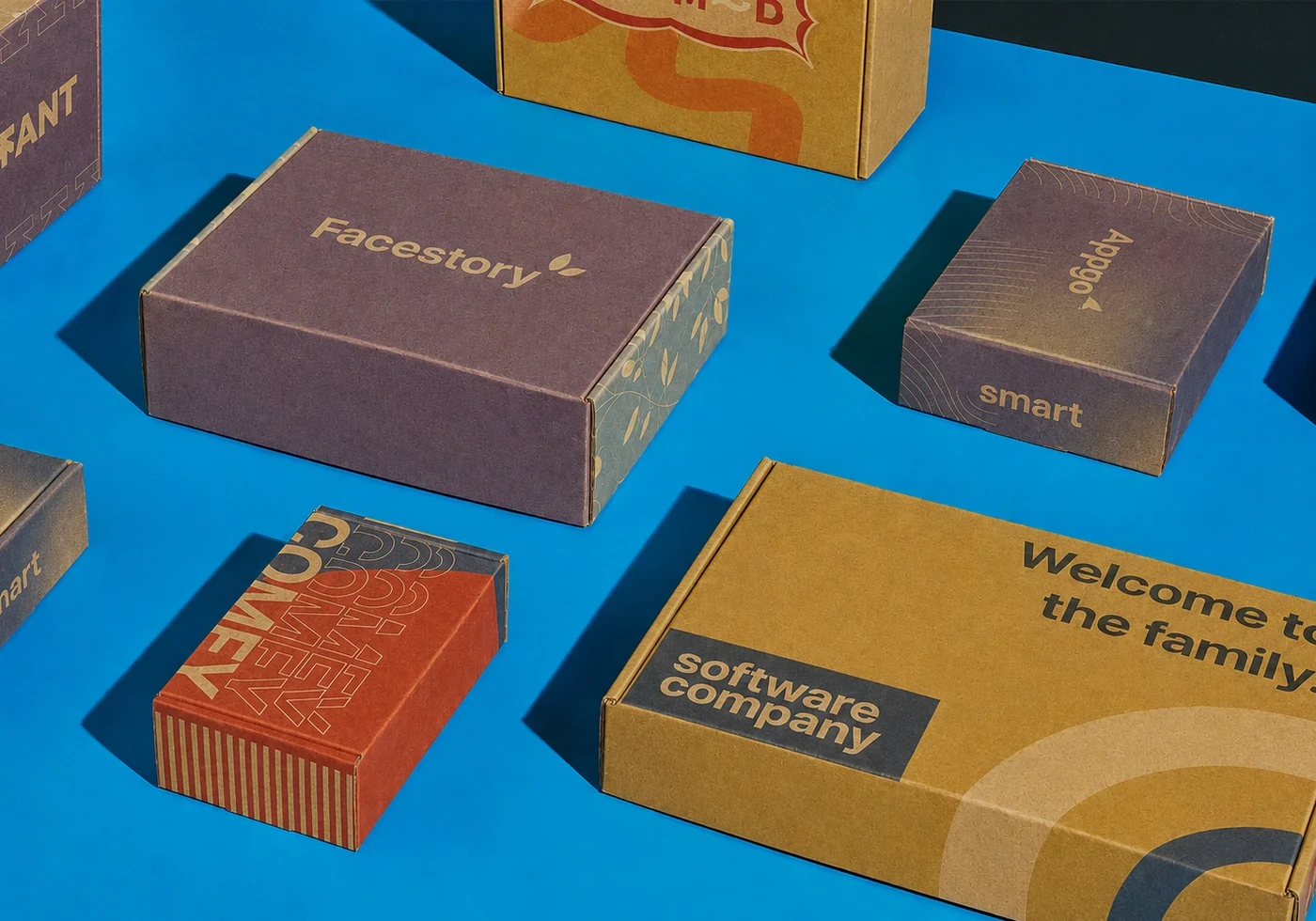
Natural or kraft-surfaced paper directions for brands that want a tactile, less heavily printed look.
Rigid Board
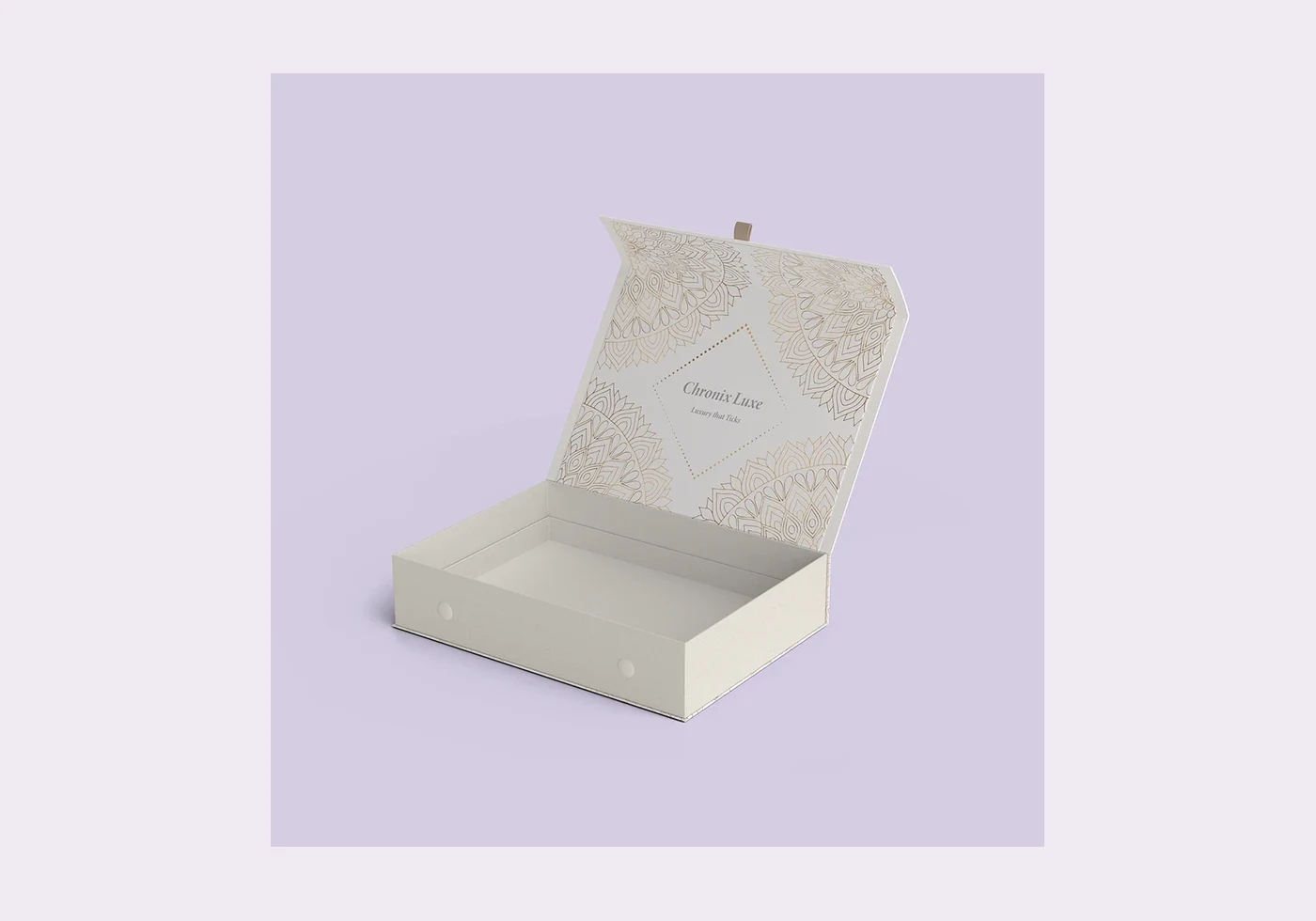
Thick solid-board construction used in premium setup boxes where structure, feel and product reveal matter.
Paperboard
Paperboard / Cardboard: Lightweight, Printable and Retail-Friendly
Paperboard is commonly used for folding cartons because it can be printed as a flat sheet, die-cut, creased and folded into a lightweight box. It is a strong starting point where shelf communication, efficient storage and detailed print matter more than heavy shipping protection.
The buyer still needs to choose a grade and thickness that fit the product. Coatings, uncoated surfaces, windows and finishes can change appearance and end-of-life considerations.
Corrugated
Corrugated Board: Built for Handling, Shipping and Structural Protection
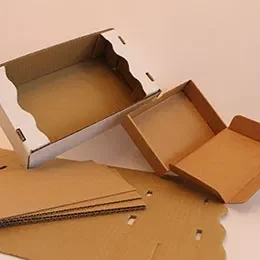
Corrugated board adds a fluted paper layer between liners, creating thickness and cushioning that paperboard alone does not provide. That makes corrugated a common starting point for mailer boxes, shipping boxes and products that face parcel handling or stacking.
Performance depends on more than “corrugated” as a label. Flute profile, liner, board construction, dimensions, box style, product load and printing method all affect the final result.
Kraft
Kraft Is a Material Direction — Not a Sustainability Shortcut
“Kraft” usually describes paper produced for strength and often associated with a natural brown appearance, but packaging sold as kraft can use different fiber blends, coatings, colors and constructions. Kraft may be used as a paperboard direction or as liner material in corrugated packaging.
Choose it because its surface, strength and print behavior fit the package. If recycled content, certification or recyclability is part of the reason for choosing kraft, verify those attributes separately for the exact board.
Rigid Board
Rigid Board: Substantial Structure for Premium Packaging
Rigid setup boxes use thick solid board that is typically wrapped in printed or specialty paper rather than folded from a single lightweight carton sheet. The result feels substantial and supports premium opening formats such as lid-and-base, magnetic or drawer directions.
Rigid board is not automatically a stronger shipping solution and it is not automatically the most sustainable choice. Compare storage volume, wrapping materials, inserts and the need for an outer shipper.
Paperboard vs Corrugated: Which Material Fits the Job?
Choose paperboard when the main job is lightweight retail presentation, detailed printed panels and efficient flat packing. Choose corrugated when the package needs more structural protection for shipping, stacking or handling.
Some products use both: a paperboard retail carton plus a corrugated outer shipper.
Why “Thickness” Means Different Things Across Packaging Materials
A paperboard buyer may discuss caliper, point or GSM; a corrugated buyer may discuss flute profile, liners and board construction; a rigid-box buyer may discuss board thickness plus wrapping paper.
These values cannot be compared as if they are the same measurement of quality. The approved quote/specification should carry the exact grade and thickness.
REQUEST A MATERIAL RECOMMENDATIONCompatibility Matrix
Material Selection Changes Printing, Finishing and Structure
Decision
Paperboard
Corrugated
Kraft Direction
Rigid Board
Typical role
Retail / folding cartons
Mailer / shipping
Natural-paper direction across structures
Premium setup boxes
Print surface
Often smooth/coated or uncoated
Depends on liner and process
Natural/uncoated or coated variants
Printed/specialty wrap over board
Flat storage
Strong advantage
Common for many styles
Depends on structure
Traditional setup boxes use more storage volume
Structural protection
Lower than corrugated for shipping
Higher for handling/shipping
Depends on underlying board/structure
Substantial feel; shipping performance must be separately engineered
Special finishes
Many options; verify grade/process
Available but process/liner dependent
Contrast/ink/finish behavior varies
Common on wrap papers; verify compatibility
Sustainability claims
Package-specific
Package-specific
Do not infer from brown color
Material/component-specific
Use “verify” rather than assuming a capability or environmental claim applies to every grade and structure.
Print & Color
The Same Artwork Can Print Differently on Different Materials
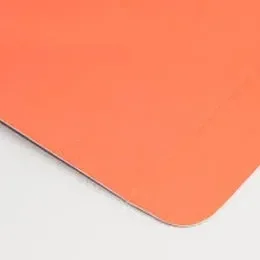
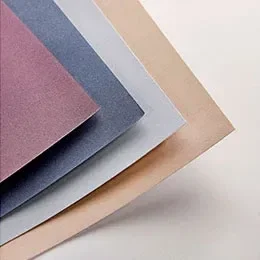
Surface color, coating, texture and absorbency change how ink and finishes appear. A bright coated white board, natural kraft surface, corrugated liner and specialty rigid-box wrap may all produce different color and tactile results from the same digital artwork.
If exact brand color is critical, define the substrate and color-control method before the proof is approved. Do not approve color on one material and assume it will reproduce identically on another SKU or reorder.
Finish Compatibility
Choose Finishes After the Material — Not Before
Foil, embossing, debossing, Spot UV, lamination, soft-touch, coatings, windows and specialty papers can create strong effects, but compatibility depends on the substrate and production method.
Use the visual concept to define the desired effect, then validate whether the selected board can reproduce it reliably. The finish can also change cost, lead time, surface behavior and sustainability claims.
A Material Name Does Not Prove the Environmental Claim
Paper-based materials may offer useful recycled-content, certified sourcing or recyclability attributes, but those claims belong to the exact finished package and its documentation.
Coatings, films, adhesives, windows, finishes and mixed components can change the answer.
Material and Box Style Should Be Specified as One System
A folding-carton dieline assumes a material that can crease and fold as designed. A corrugated mailer depends on flute/liner behavior and closure geometry. A rigid setup box is built differently again.
Changing the material late can change dimensions, crease allowance, print, gluing, fit and cost. Lock structure and material together before artwork is final.
COMPARE BOX STYLESLos Angeles Project Context
Packaging Material Selection for Los Angeles Brands
A Los Angeles beauty brand shipping glass containers, a bakery selling retail cartons and an ecommerce company shipping subscription kits may all use paper-based packaging — but they should not start from the same material specification.
Include product dimensions, weight, fragility, sales channel, shipping method, storage conditions, Los Angeles delivery ZIP code and presentation priorities in the brief.
Material Approval Process
From Material Shortlist to Approved Specification
DEFINE PRODUCT + STRUCTURE
Dimensions, load, channel and box style.
SHORTLIST MATERIAL FAMILIES
Paperboard, corrugated, kraft direction or rigid board.
CHECK PRINT / FINISH
Color, coating, foil, embossing, windows and tactile requirements.
REVIEW SAMPLE / PROOF
Confirm surface, fit, fold, print and construction at the appropriate proof level.
RECORD THE EXACT MATERIAL
Keep board grade/thickness/flute, supplier data and approved artwork tied to the reorder specification.
Frequently Asked Questions About Custom Packaging Materials
Clear, standalone answers for common packaging decisions.
Common paper-based custom packaging materials include paperboard/cardboard for folding cartons, corrugated board for mailers and shipping boxes, kraft paper or kraft-surfaced board for natural paper directions, and thick rigid board wrapped with printed or specialty paper for premium setup boxes.
Paperboard is a relatively thin solid paper-based sheet commonly used for folding cartons. Corrugated board uses liners around a fluted paper medium, creating additional thickness and structural protection.
In everyday customer language “cardboard” can refer to several materials. In specifications it is better to identify the actual substrate such as paperboard, corrugated fiberboard or rigid chipboard.
Kraft refers to a strong paper direction often associated with a natural brown surface, but kraft packaging can use different fiber blends, coatings, colors and constructions.
Rigid board packaging uses thick solid board that is typically wrapped with printed or specialty paper to form premium setup boxes. It is structurally different from a folding carton.
Corrugated board is a common starting point because its fluted construction provides more structural protection than typical folding-carton paperboard. The exact construction still needs to match the product.
Paperboard is commonly used for lightweight retail products because it offers efficient flat storage and strong printable surfaces.
Many kraft-surfaced materials can be printed, but the natural base color changes how inks appear compared with a white coated surface. Review the actual substrate and proof.
No finish should be assumed compatible with every substrate and production method. The desired effect, material surface, print method and equipment influence what can be produced reliably.
Some paper-based packages may qualify for recyclability claims, but the finished package should be evaluated rather than the base material alone.
Material affects board usage, weight, print process, die-cutting, finishing, assembly and shipping. Size, quantity and structural complexity are also major cost drivers.
Keep the exact board/material name, grade, thickness or flute, supplier/spec reference where available, print method, coatings/finishes, structural dieline version and approved artwork.
Ready to Start?
Request a Packaging Material Recommendation for Los Angeles
Tell us what the product needs to survive, how it will be sold and what you want the packaging to look and feel like. If you do not know the board grade or thickness, start with the product requirements.
Build Your Packaging Material Recommendation Brief
Next Step
Choose the Material for the Job — Then Build the Box Around It
Protection, print, structure, finish and sustainability all meet at the material specification. Start with what the product needs, compare realistic options and record the exact approved board for production and reorders.