
PRODUCT
Dimensions, weight, fragile areas, surfaces and components.

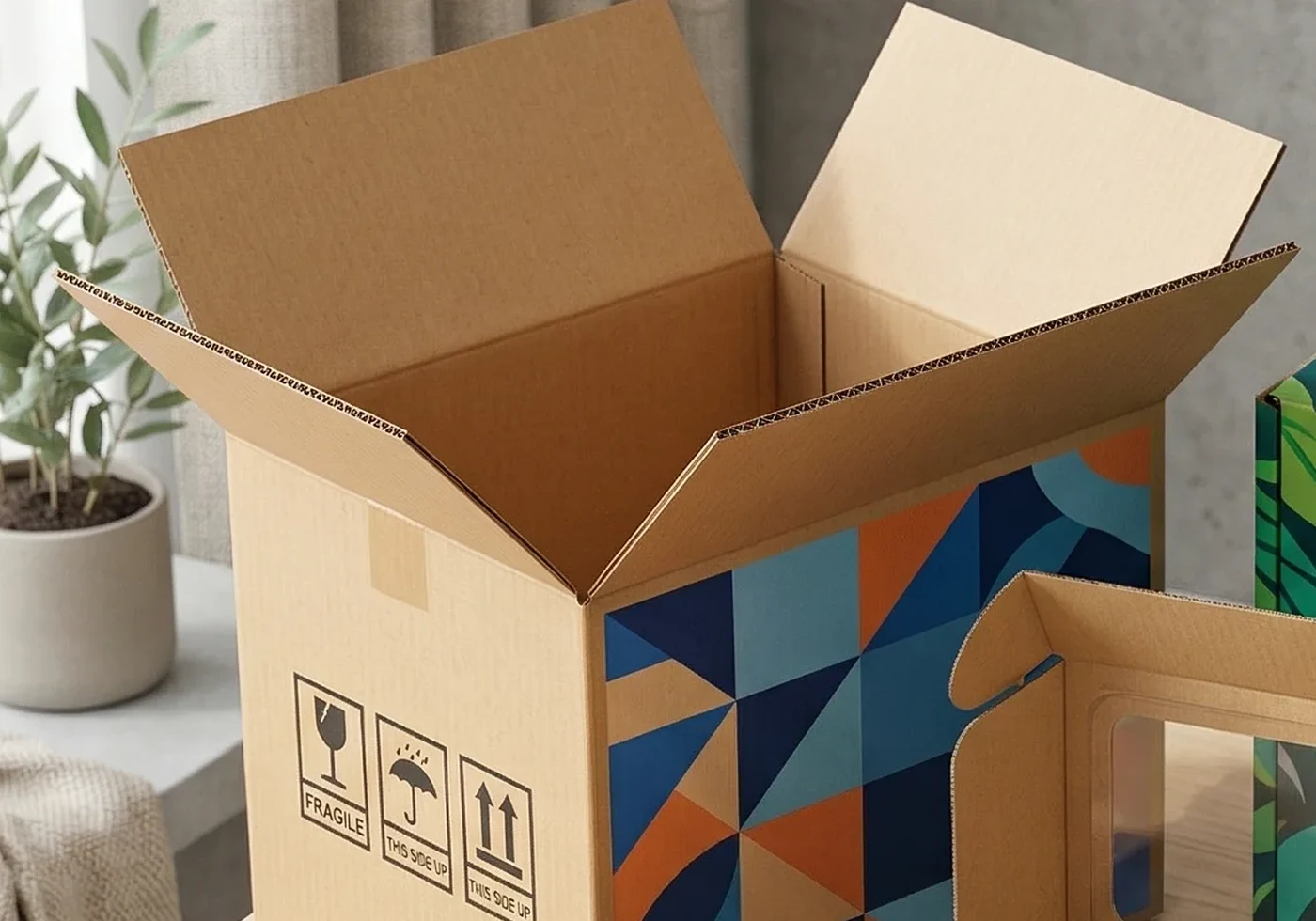
Build corrugated shipping boxes around the product load, packing workflow and distribution journey — not just a stock carton size. Custom dimensions, board construction, printing and internal protection can be specified together so the shipping package is easier to pack, identify, transport and reorder.
Start with the product dimensions, weight and route. The box style and corrugated specification come next.
Final dimensions, materials, print routes and performance claims are confirmed against the actual project specification.
A custom shipping box is a corrugated transport package specified around the product dimensions, load and distribution needs. It may use a common slotted-carton format such as an RSC or a more specialized die-cut structure.
The box itself is only one part of the shipping system. Corrugated board, empty space, internal protection, sealing and handling conditions all affect how the packed shipment performs.
Oversized cartons can increase board area, empty space and the amount of void control required. A box that is too tight can create compression, difficult packing or insufficient protective space.
Measure the product in its real packed orientation, include any insert or wrap, and confirm whether quoted dimensions are internal or external before comparing suppliers.

Corrugated board is built from liner sheets and a fluted medium. Different constructions change thickness, rigidity, print surface and load behavior. The right choice depends on product weight, box dimensions, stacking, handling and distribution — not on a universal best flute.
Record the approved board construction with the reorder specification so a future box is technically the same product, not simply the same dimensions.
A shipping carton must stay closed through its intended distribution journey. The appropriate tape, adhesive or closure approach depends on the box style, board surface, product load, environment and fulfillment process.
Leave clean sealing areas in the artwork and do not place critical graphics where tape, labels or handling marks are expected.
Group products by packed dimensions, weight, fragility and common order combinations, then test whether a smaller set of box sizes can cover the real order mix without excessive empty space.
The goal is not the fewest possible boxes — it is a manageable set that balances fit, operations and inventory.
Printed shippers can carry logos, instructions, handling messages and campaign graphics, but practical label zones should be planned first. Reserve a consistent flat area for the carrier or warehouse label and keep critical artwork away from seams, tape and heavily handled edges.
Two boxes with the same length, width and depth may not be the same specification. Compare the complete system before deciding which quote is actually lower cost.
Include the Los Angeles delivery ZIP code, receiving access, pallet or carton preferences where relevant, storage limits and target launch date in the brief. If a third-party fulfillment partner is involved, capture its labeling, size and packing requirements before final approval.
Right-sizing can reduce board area and unnecessary void material. Then evaluate documented fiber, recycled-content or certification information and the finished box’s coatings, adhesives and recoverability.
Explore Sustainable Packaging →Product, weight, order combinations and route.
Right-sized dimensions and RSC/die-cut direction.
Corrugated construction, dividers/inserts and sealing.
Label zones, artwork, dieline and packed prototype.
Approved dimensions, board, artwork, quantity and delivery terms.
Direct answers about structure, sizing, board, printing and transit planning.
If you do not know the RSC code, flute or board strength, start with the shipment profile. The technical specification should be built from the product and route.
Start with the product, route and packing workflow. A strong shipping specification follows from those inputs.